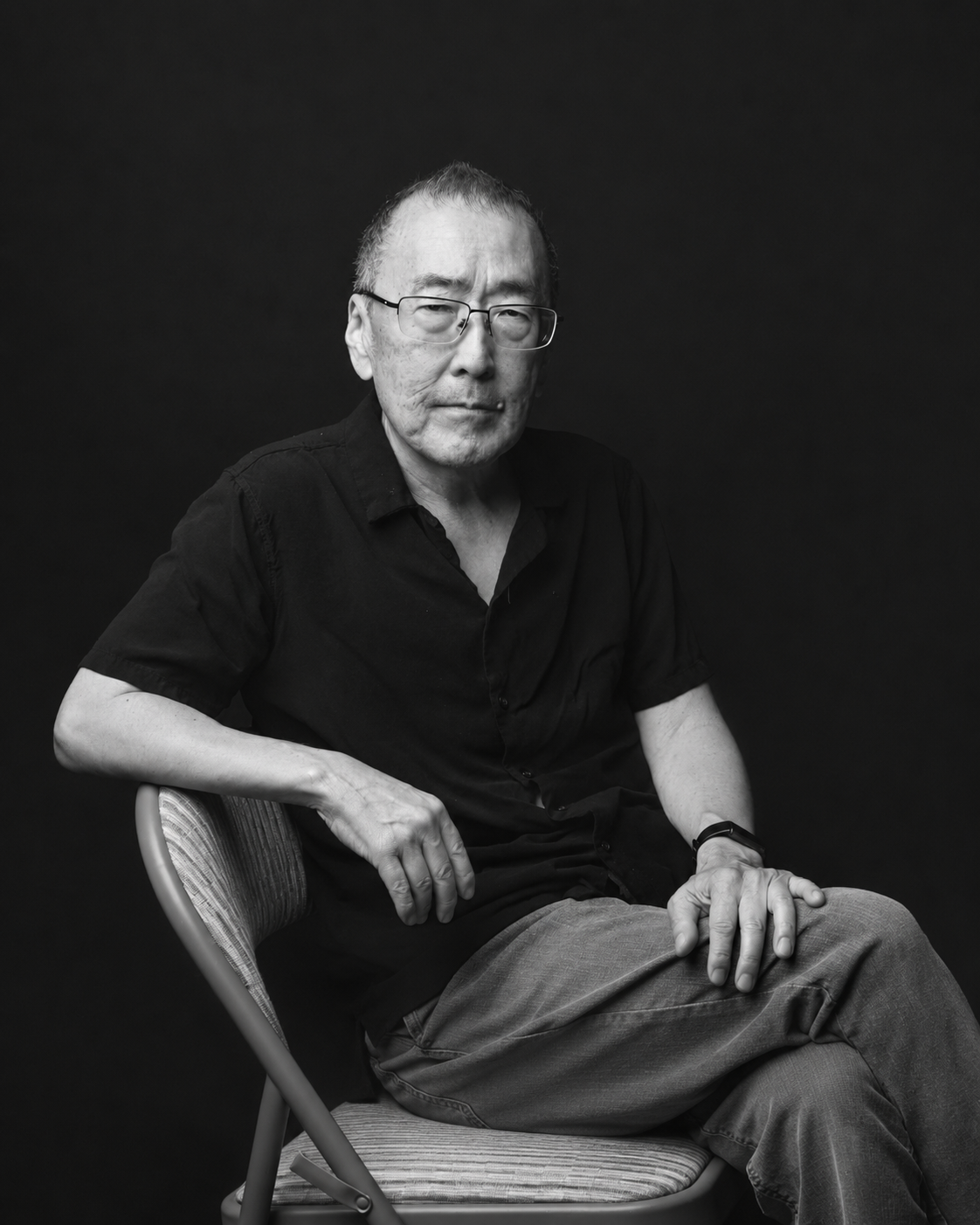
John W. Kim is a Korean-American writer and director of film and television and former journalist.
He began writing plays and fiction in high school as well as performing, becoming a founding member of Shakespeare Santa Cruz, where he acted with members of the Royal Shakespeare Company under the direction of Audrey Stanley, the first woman to run a Shakespeare festival in the United States. He graduated with honors in Literature and Creative Writing, studying under novelist James D. Houston, playwrite George Hitchcock, and poet Lynn Luria-Sukenick, publishing his short story collection “Earth Fires,” about his experiences as a Korean American boy growing up in Northern California. There he made his first films under the guidance of experimental filmmaker Eli Hollander.
He then attended USC’s School of Cinema-Television, where he studied with instructors Ivan Passer (“Cutters Way”), Frank Pierson (“Dog Day Afternoon”), and Franklin Daniel. His graduate work was screened at a number of national festivals, including the San Francisco Independent Film Festival, Edinburgh Los Angeles Film Festival, and the New York Asian-American Film Festival. His short films have screened at the Motion Picture Academy and the Director’s Guild of America.
His screenplays have received notice in a number of national competitions and fellowships, including multiple Quarterfinalist and Semifinalist placements in the Motion Picture Academy Nicholl Fellowship, Austin Screenplay and Television pilot competitions and the Sundance Screenwriter’s Lab. His script of “Reunion” was awarded the Silver Prize in Comedy by the Page International Screenplay Competition. His most recent project, the animated television pilot “Urban Defender,” written with co-creator Will Griffin and based on an original IP comic, is currently in development, as is his next feature project, “The Request,” a dark Crime Thriller set in a corrupt, modern day America.
Director´s Statement
Who would you be if no one knew who you really were? Growing up as a first generation Korean American, I spent much of my early life operating between two cultures - the world of tradition and the world of expectation. Juggling identities in each, I found myself trapped between both, a home where Korean custom was followed and a world outside where punishment was meted out harshly for being “different.” Within this universe I would occasionally be mistaken for someone else - “another Asian” or a “model minority” - even though my behavior as a rebellious teen reflected anything but. Clashing with authority while embracing American mainstream culture, I found myself wondering what it might be like if everyone perceived me as someone I was not and what the repercussions - both comedic and serious - might be.
Out of these speculations, an idea morphed into a comedic fantasy about mistaken identity at a high school reunion, the basis for the screenplay Reunion, the underdog story of Guy Park, a dutiful Asian American son of deceased immigrant parents, working at a failing funeral home for his unsympathetic taskmaster stepfather. One night he takes a chance by attending his high school reunion to revisit his past and, hopefully, to discover a different future.
The story is a modern twist on the Cinderella tale of being forgotten, while trying to remember the promise of what once might have been. Reunion chronicles the gathering of former high school jocks, prom queens, class presidents and fading movie stars, along with the "less cool” invisible kids, twenty years after graduation, surrounded for one night by reminders of what their potential once was while searching for their elusive “American Dream,” and focusing their fading ambitions on one Ellison Loudermilk, the mysterious billionaire whom Guy is mistaken for.
Filled with equal parts humor, hubris and despair, Reunion is the “What If” siren song of every man and woman chasing the disappearing horizon of their own promise. The film speaks to all of us who have ever been invisible in a room or a crowd, unseen by those around us, and the comedy and pathos of being misidentified, even for a moment, while imagining what might have been and looking for one last chance at redemption.